Jane Austen Circular Walk
4.5 miles (7.2 km)
This 4.5-mile circular trail invites you to explore the heart of Jane Austen country, beginning at the very home in Chawton where the author spent her final eight years.
Now a museum within the South Downs National Park, this 17th-century house served as the creative sanctuary where Jane wrote or revised all six of her famous novels. The journey follows her footsteps through the beautiful Hampshire countryside, leading you across rolling fields and through the quaint village of Upper Farringdon, which is filled with traditional thatched cottages.
As you navigate the route, you will pass through peaceful woodland and return along a scenic disused railway line....
The terrain includes some steady climbs and descents, and while the paths are generally well-made, they can become quite muddy during wet weather, so sturdy footwear is a must. Along the way, you will encounter several kissing gates and six stiles; please note that while most are easy to cross, the final tall stile may require you to assist your dog. After finishing your walk through this literary landscape, you can relax with refreshments at the village pub located right at the trailhead.
To continue your walking in the area head to Chawton Park Wood.
More
Photos

Jane Austen's house and museum, Chawton. Jane Austen’s time in Chawton, from 1809 until 1817, marked the most prolific period of her career. After years of instability following her father’s death, the move to this quiet Hampshire village offered her the security and peace she needed to write. It was here, at a small walnut table near the window, that she revised her earlier manuscripts for Sense and Sensibility and Pride and Prejudice and wrote her mature masterpieces, Mansfield Park, Emma, and Persuasion. The house itself, a 17th-century cottage provided by her wealthy brother Edward, was shared with her mother and beloved sister Cassandra, who took on many household duties to give Jane the freedom to work.

St. Nicholas Church at Chawton. Jane was far from a recluse; she was deeply embedded in the local community, and her observations of village life often found their way into her fiction. She frequently walked to the nearby market town of Alton to shop, collect post, and socialise, a route that kept her connected to the wider world. Her brother Edward owned the grand Chawton House (the "Great House") just up the road, where Jane and her family were frequent visitors, enjoying its library and strolling through its grounds. She also maintained connections with friends in neighbouring villages like Upper Farringdon, where she visited the vicar's family.

The Old Bakehouse and Granary at Jane Austen's house, Chawton. Although she published anonymously during her lifetime—her books simply credited to "A Lady"—her witty social commentary and realistic characters have since cemented her status as a literary icon. Her health began to decline in 1816, and she moved to Winchester in May 1817 to be closer to her physician, passing away there just two months later at the age of 41. She is buried in Winchester Cathedral, but her creative spirit remains most vividly alive in Chawton, where the Jane Austen's House Museum continues to welcome those wishing to see the world as she saw it
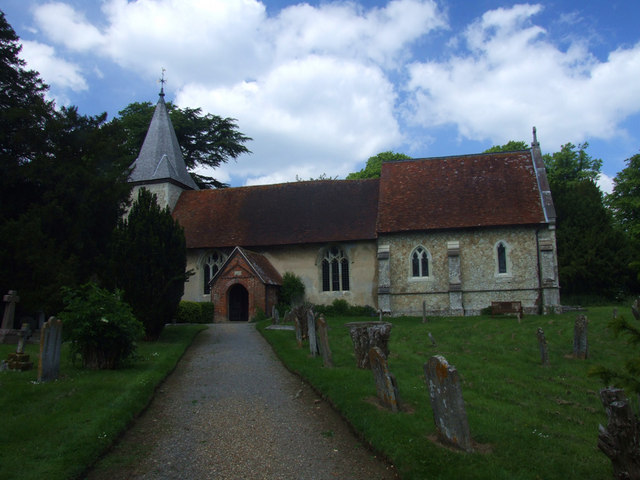
All Saints Church, Farringdon. Jane Austen lived near Farringdon, at Chawton. She wrote in her letters that she walked to Farringdon. Her brother, Frank, had a pub built in Farringdon.
 Ordnance Survey Map
 OpenStreetMap
 OS Map (Mobile GPS)
 OpenStreetMap (Mobile GPS)


